SRI-
CO3- Ionization for Organic and Inorganic Acids Detection
With SRI-, bipolar FUSION PTR-TOF instruments can now switch to CO3- ionization with the push of a button! Monitor inorganic substances and acids with a PTR-TOF instrument.

Enhance the selectivity to inorganic and organic acids with CO3-
Acids characterize a plethora of chemical processes: atmospheric oxidation forms a complex mixture of organic acids, perfluoroalkyl carboxylic acids (PFCAs) impact the environment and small inorganic acids like HCl define modern-day high-tech industrial productions. Having a highly selective ionization mode like CO3- now enables a direct characterization helping to deepen the understanding of our environment and enabling the monitoring and optimization of processes.
Advantages of SRI-
Proton-Transfer-Reaction mass spectrometry (PTR-MS) using H3O+ reagent ions is an established low-pressure chemical ionization method for real-time monitoring and direct quantification of volatile organic compounds (VOC). While this method covers the vast majority of organic compounds, further primary selective reagent ions (SRI) like NO+, O2+, NH4+ can significantly increase our understanding of the chemical composition of complex samples. Recently, IONICON introduced a next-generation PTR-MS, the FUSION PTR-TOF, boosting the sensitivity to unprecedented levels while still conserving the genuine, predictable ion chemistry. IONICON now introduces SRI-, extending the instrument capabilities to the negative ion mode. Owing to the incorporation of the novel Fusion RF reaction chamber, reagent ions like CO3- become accessible. These enable the detection of inorganic compounds like SO2, HNO3, H2SO4, other inorganic acids and organic acids. Switching requires no hardware modifications and can be done fully automated. Hence, the bipolar FUSION PTR-TOF offers maximum flexibility to capture both quantitative H3O+ and CIMS-like CO3- data in real-time with one single instrument.
Characterization of SRI-
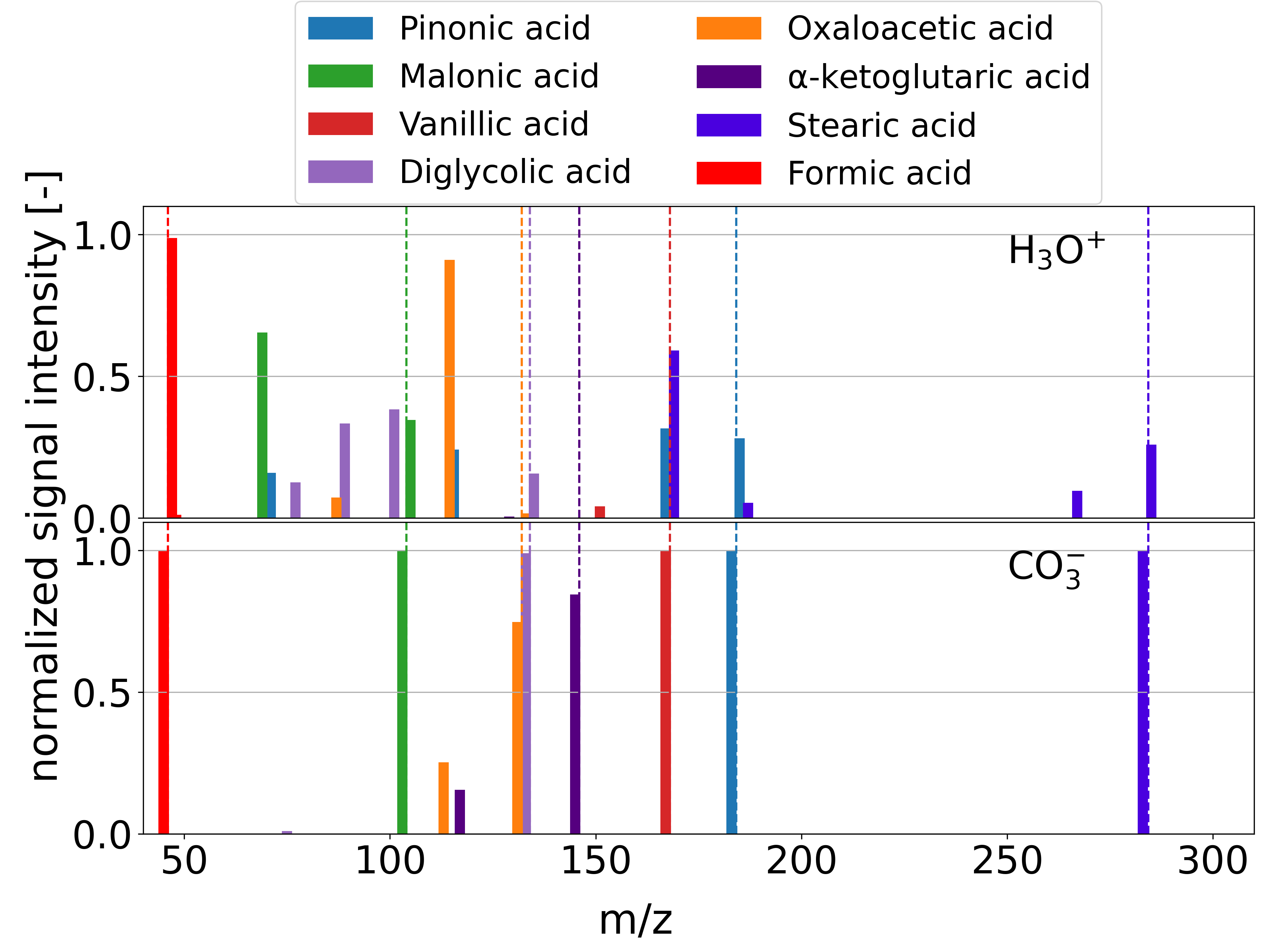
CO3- ionization is most selective to acids. A large number of organic acids are detected predominantly via H+ abstraction; some compounds like larger perfluoroalkyl carboxylic acids (PFCAs) also show an increasing degree of A.CO3- adduction ionization. An intercomparison with H3O+ proton transfer reaction reveals a simplified detection scheme with significantly reduced fragmentation.
Ambient detection of PFCAs
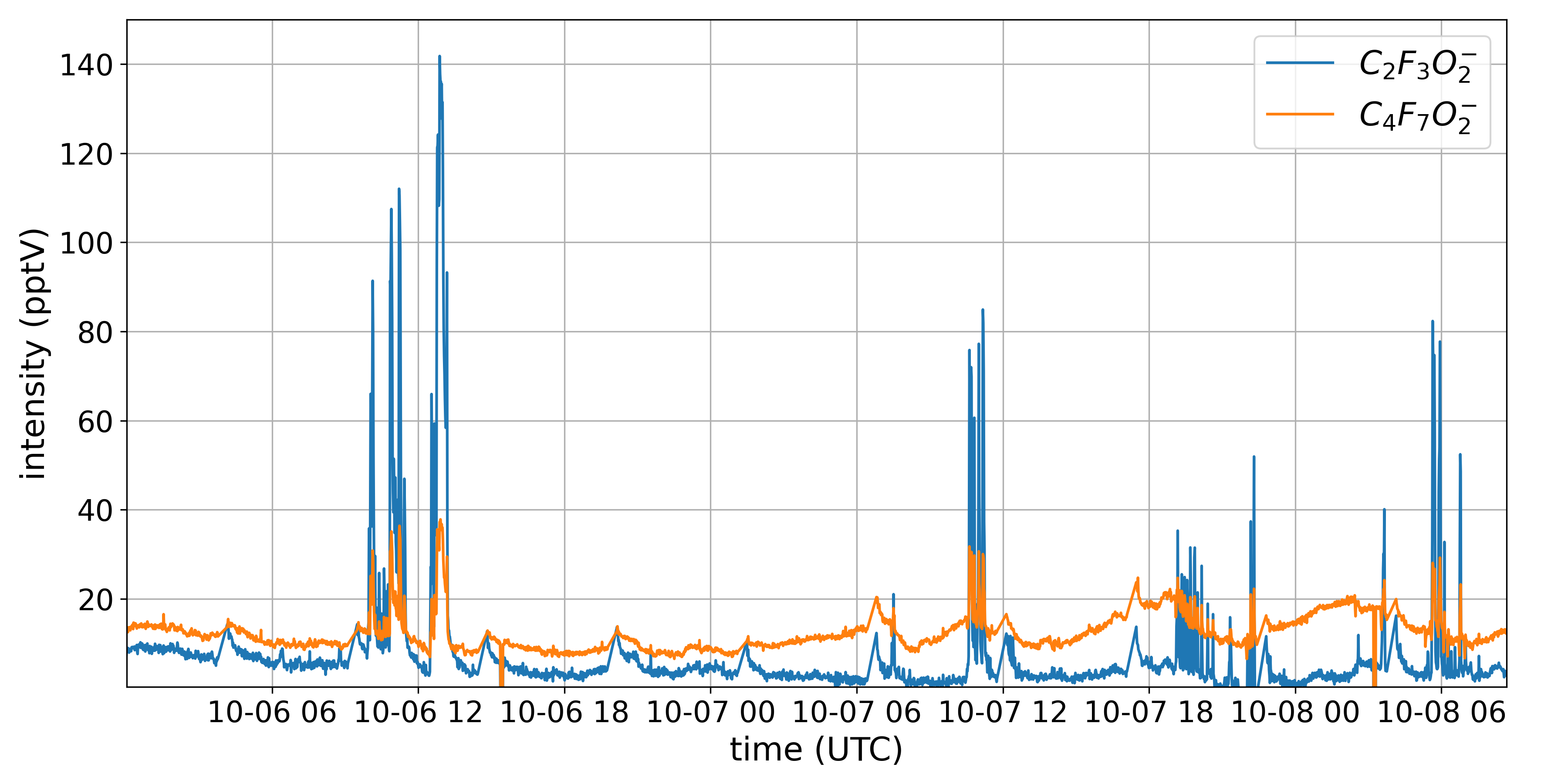
Perfluoroalkyl carboxylic acids (PFCA) are fluorine containing organic acids and present a subgroup of per- and polyfluoroalkyl substances (PFAS). Similar to PFASs, PFCAs are of concern for the environment and human health as they can accumulate in the environment and in living organisms like animals and humans. Today, these synthetic compounds have been found all around the globe. PFCAs can be detected using CO3- ionization. Two of them, C2F3O2- and C4F7O2-, are exemplary shown from a dataset of ambient air in Innsbruck, Austria. Trifluoroacetic acid (TFA, C2HF3O2) is typically used in analytical chemistry but has also been detected in beverages like beer and tea or in the environment. Perfluorobutanoic acid (PFBA, C4HF7O2) is a product from the oxidation of other PFAS.
Ambient detection of SO2
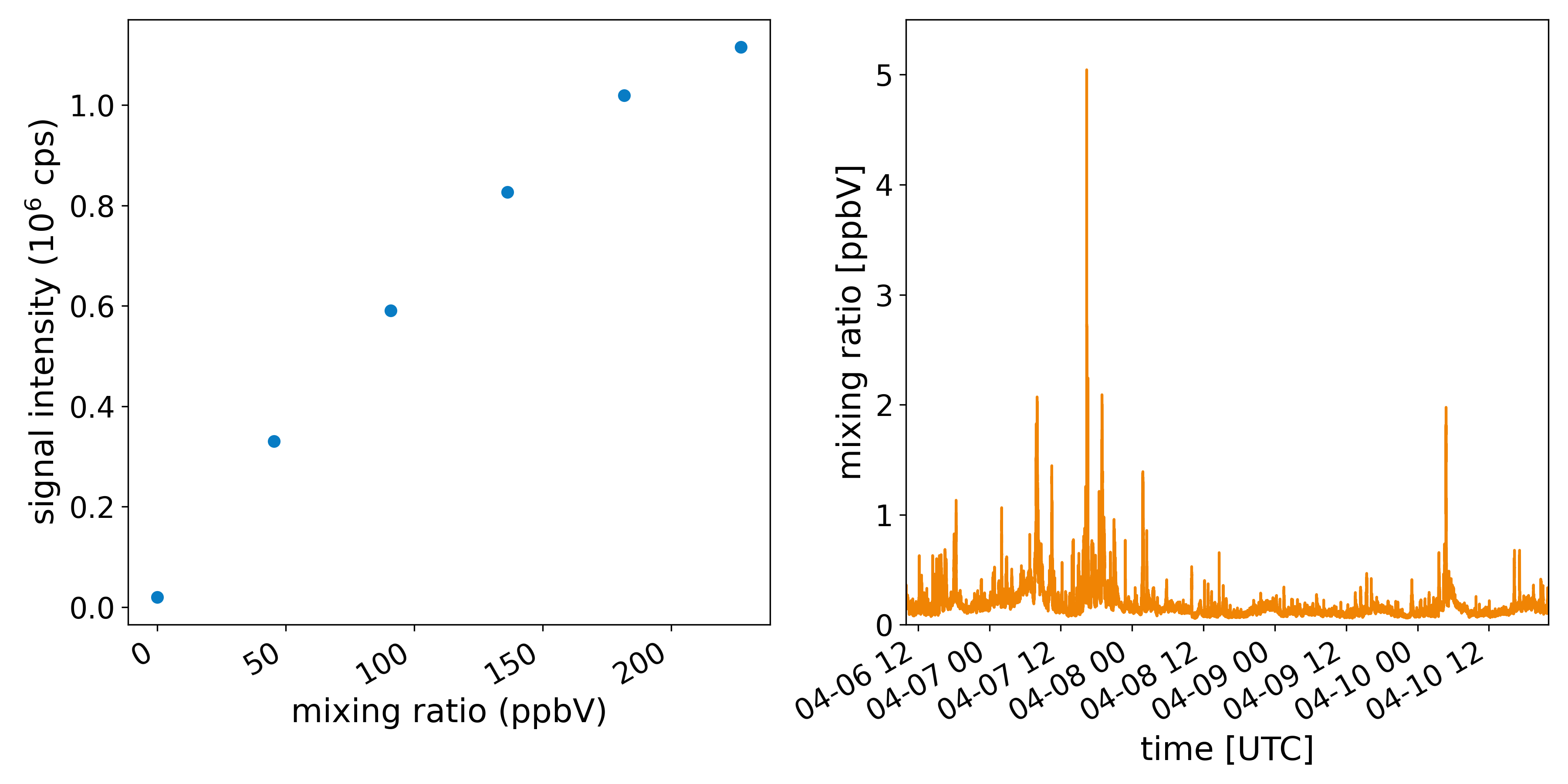
In addition to acids, inorganic compounds like SO2 can finally be detected via SRI-. SO2 is commonly emitted by burning of fossil fuels and certain industrial processes and is harmful to health and the environment. Ionization via SRI- results in a linear response > 150 ppbV and limits of detection in low double digit pptV levels. Ambient measurements reveal the high variability of SO2 in Innsbruck in April.
Get SRI- for FUSION PTR
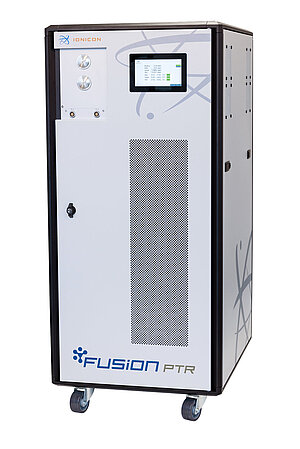
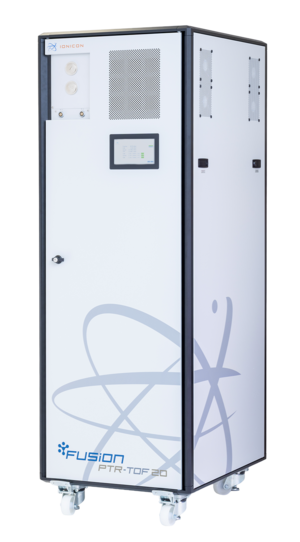
Have a look at the FUSION PTR-TOF 10k and consider optional bipolar TOF option for your instrument. Get in touch with us for your instrument quote!