VOCentinel at IAO: A New Era of Continuous VOC Monitoring
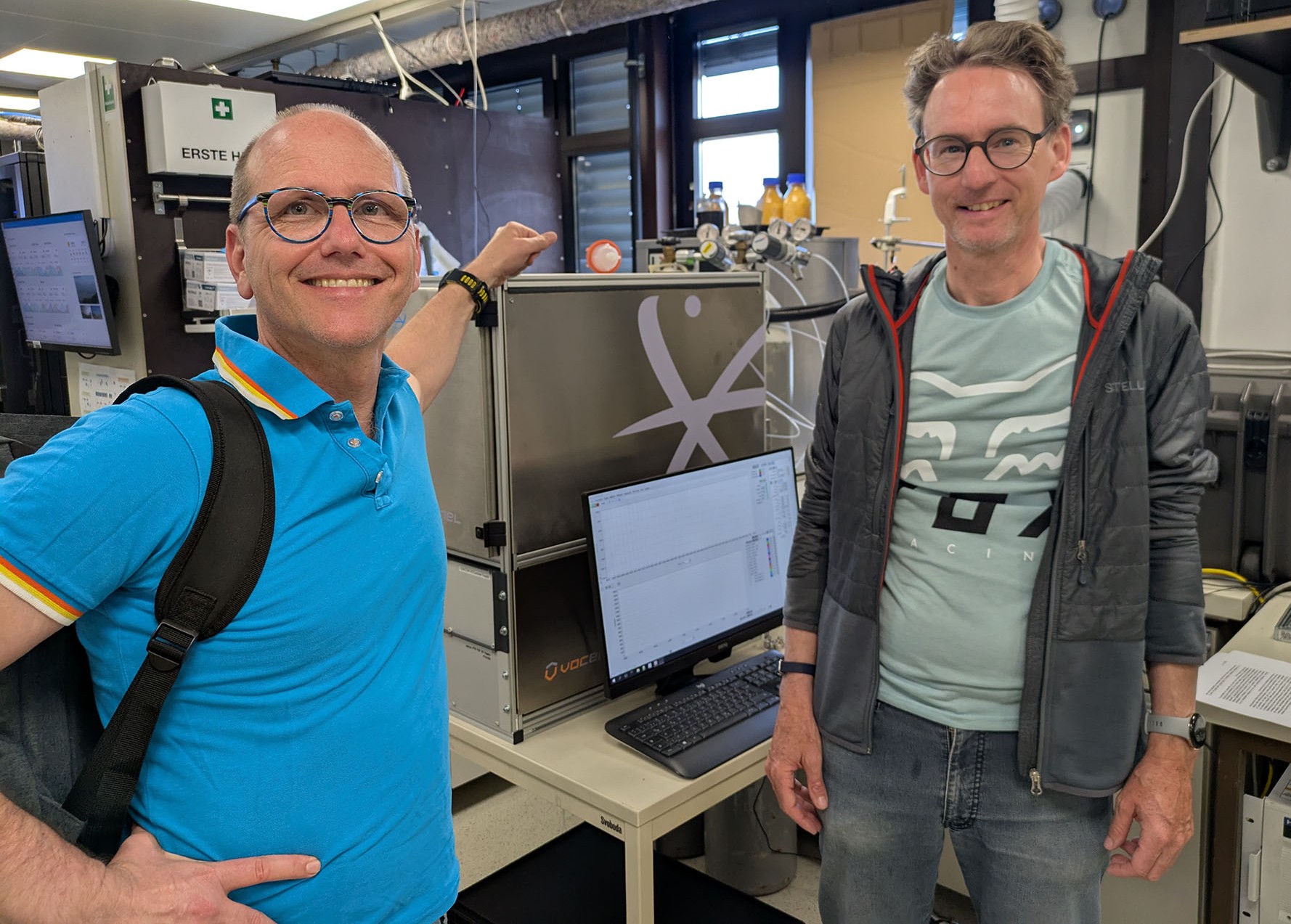
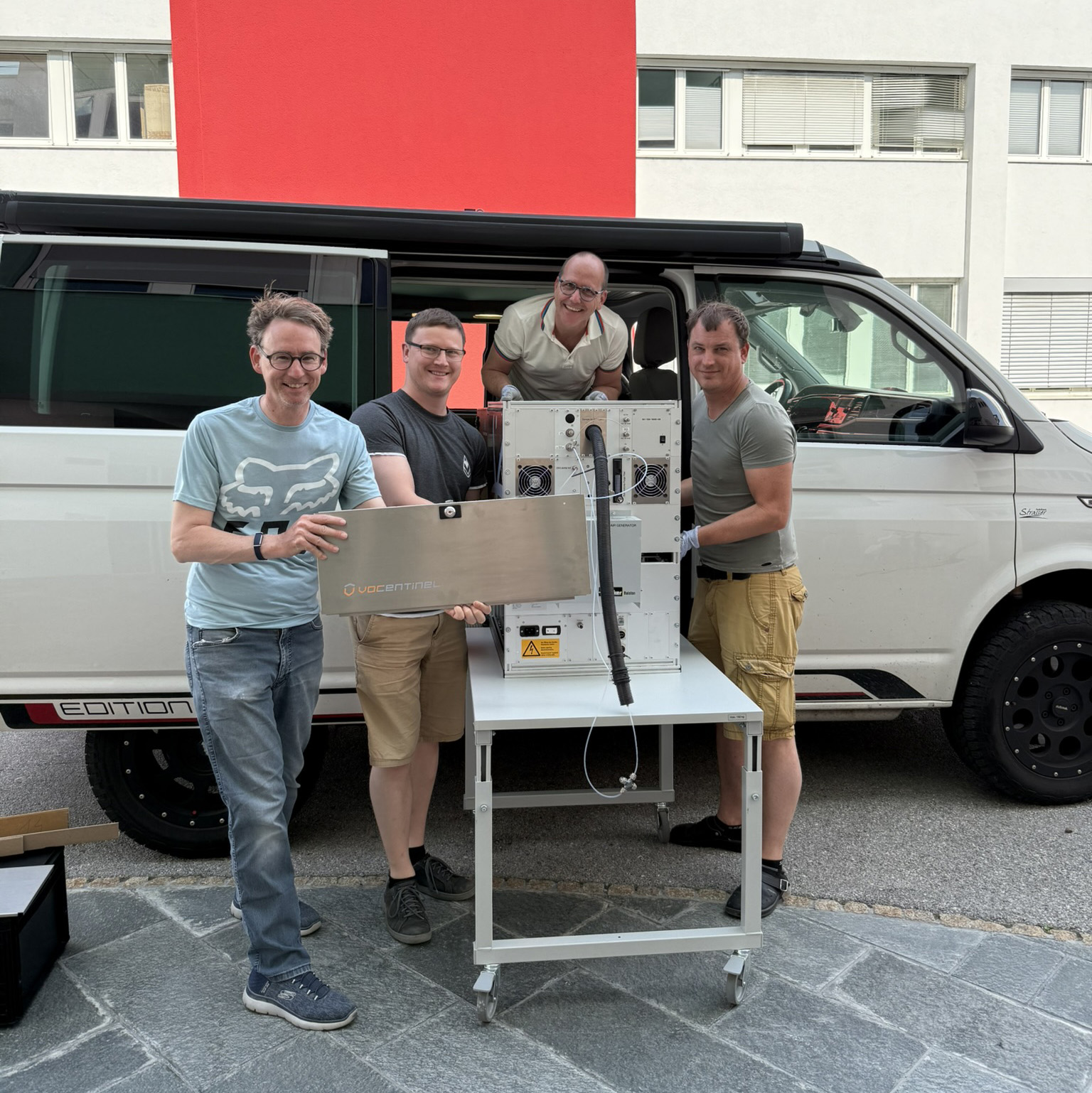
Since June 2025, a prototype of the new VOCentinel has successfully been deployed at the Innsbruck Atmospheric Observatory (IAO) at the University of Innsbruck. The instrument has been fulfilling the intended mission that it was designed for: the long-term, continuous monitoring of volatile organic compounds (VOCs) in the ambient atmosphere.
The ideal of continuous, hands-off VOC monitoring
"We established the IAO in 2014, starting with continuous measurements of turbulence, energy, nitrogen oxides, ozone and carbon dioxide fluxes, complemented by campaigns of VOC flux measurements by PTR-TOF," says Prof. Thomas Karl, Head of the Department of Atmospheric and Cryospheric Science at the University of Innsbruck.
Since then, the IAO has added instrumentation to continuously measure fluxes of methane, and ethane, along with almost a dozen VOC campaigns. However, continuous, high-resolution VOC measurements have historically been too labor-intensive and challenging.
"We have been dreaming of a VOC monitor that reports concentrations of VOCs and takes care of detector tuning, calibrations, background subtractions, and other data preprocessing, just like our other online instruments," Prof. Karl explains. “The difference is that those instruments are dedicated to one or two trace-gas species each, whereas our PTR-MS can detect thousands of VOC species, spanning many orders of magnitude in concentration and volatility.”
From Cleanrooms to the Atmosphere: The AME Advantage
IONICON’s R&D team has long been aware of the challenges of continuous VOC monitoring. IONICON has perfected this task for stringent industrial applications, such as in the semiconductor industry and cleanroom monitoring.
"The requirements in this field are rigorous in both reliability and precision," says Jens Herbig, CTO at IONICON. "Our industry customers do not want to merely collect data; they need actionable information in real-time. This means the critical exceedance of a specific compound must trigger a real-world procedure, such as cleaning up a solvent spill."
To this end, IONICON developed the Automatic Measurement and Evaluation (AME) software, which deploys different reagent ions in a cyclic schedule, teasing out chemical information far beyond the simple mass-over-charge ratios of ions. The proprietary pattern matching algorithm identifies chemical compounds and minimizes the risk of false positives due to species interferences. A central piece of software manages operational tasks and data processing, which, combined with the robust PTR-TOFs featuring genuine IONICON ion source and drift tube, constitutes the AME approach.
The Challenge of Ambient Air: Thousands of VOC Species
There is a critical difference between cleanroom air and outdoor air samples that must be considered. The former is pre-cleaned and humidity-controlled, typically containing a known suite of potential contaminants. In contrast, outdoor air is subject to the full swing of meteorological conditions and may contain thousands of VOC species, many unknown.
However, recent technical developments by IONICON, such as the fast-switching Invion source and the Dynamic Humidity Control (DHC), now make it viable to deploy IONICON’s robust AME approach towards the monitoring of VOCs in the ambient atmosphere.

Solving the Isoprene-Aldehyde Conundrum
In urban environments, various intermittent or changing sources of VOCs can make data processing and interpretation difficult. This is often seen when "unthought-of" compounds interfere at exact masses that have traditionally been associated with a single predominant compound. For example, in downtown settings, researchers have demonstrated that a significant portion of the signal at 69.070 m/z – which is widely associated with protonated isoprene – may in fact stem from aldehydes produced by cooking, frying, and other human activities.
This problem can successfully be addressed by chemically distinguishing the aldehydes and other interfering substances from isoprene. This is achievable because the AME scheme, utilizing five distinct ionization modes, provides a characteristic feature for each interfering compound. This allows for their unambiguous identification and quantification within a mixture that includes isoprene, aldehydes, and alcohols. Furthermore, a crucial element of the pattern matching algorithm is its robustness, allowing it to maintain efficacy even against compounds that are unknown or unanticipated.
Game Changer: Long-Term Testing and Future Impact
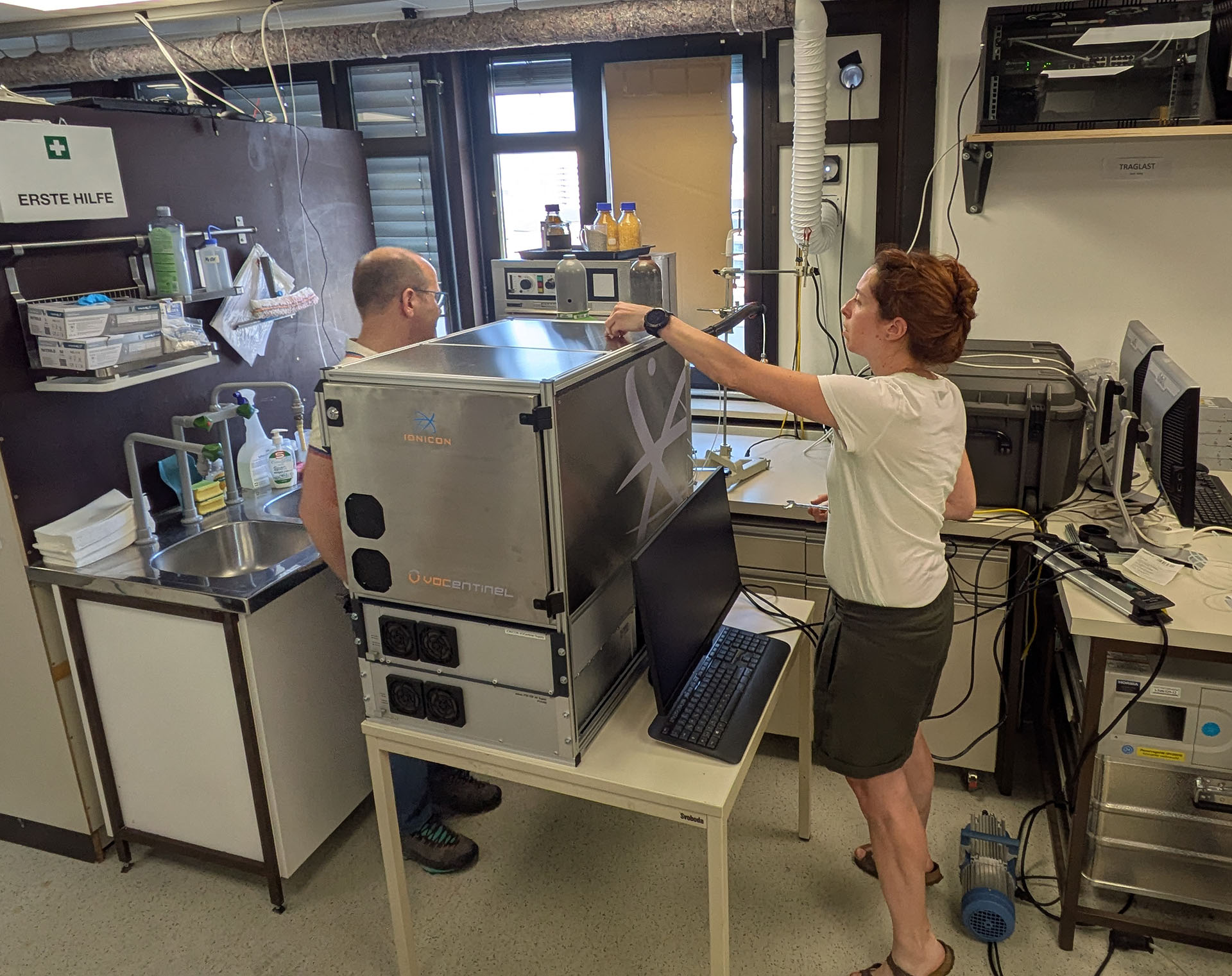
"We are excited to have IONICON’s VOCentinel prototype deployed at IAO," says Prof. Karl. " This enables comprehensive long-term testing of the new instrument and unlocks valuable new insights — as effortlessly as turning a key."
He adds that their urban-alpine measurement site is well-characterized, and the IAO is an ACTRIS national facility getting ready for the labeling process. “The VOCentinel will be a gamechanger in this community and related fields.”
Ready for automated, high-resolution air monitoring? Explore the full technical specifications and capabilities of the VOCentinel.